

Office Address
11250 Fulton St E
Lowell, MI 49331

What to Expect After PRP Treatment for a Pet’s Joint Injury
Your dog may bring you the leash the morning after a joint injection, ready for the usual walk. Even if your pet seems eager to move, the injured joint may still need time before it can handle a longer walk or a jump onto the couch.
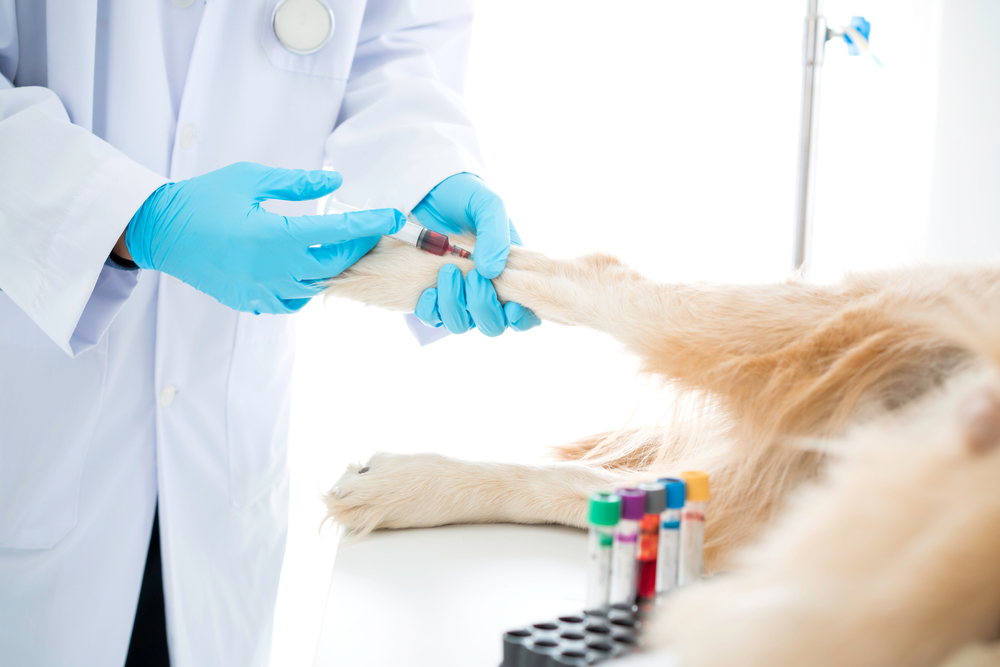
At our Lowell clinic, we use platelet-rich plasma (PRP) prepared from your pet’s own blood to support healing in certain joint injuries. How much activity is safe depends on the injury, so follow the activity limits we recommend for your pet.
The First 48 Hours After a PRP Injection
Your pet may feel sore around the treated joint for a day or two. You might notice stiffness when your pet first gets up or a slight increase in limping. That early soreness should begin to ease. If it hasn’t started to improve after 48 hours, give us a call.
Call us right away if your pet stops putting weight on the leg, pain gets worse, the joint becomes increasingly warm or swollen, or you notice discharge at the injection site. Follow your pet’s medication instructions, and check with us before giving an extra dose or restarting an anti-inflammatory medication.
Making Rest Easier at Home
A few changes at home can help your pet move around safely while activity is limited.
Take your dog outside on a leash for bathroom breaks, even in a fenced yard, to prevent a sudden sprint.
Put a nonslip runner along the path between your pet’s bed, water bowl, and the door or litter box.
Set up a comfortable resting spot at floor level and block access to stairs or favorite furniture.
If you have other pets, give your recovering pet a quiet space away from invitations to chase or wrestle.
Signs of Progress Over the Next Few Weeks
Improvement after PRP treatment can be gradual. Look for small changes in familiar movements. Your dog might rise more easily after a nap, or your cat might put weight more evenly on the treated leg while walking to the food bowl. A short video of the same activity every few days can help us see changes that are hard to describe during an appointment.
At your pet’s recheck, we can compare those observations with how the joint feels and how your pet walks. That helps us decide when to lengthen walks, introduce rehabilitation exercises, or reassess an injury that still limits movement.
If you’re unsure how much activity is safe or it’s time for your pet’s PRP recheck, call Arrow Veterinary Clinic in Lowell, MI, at (616) 737-0100.


Office hours

- Monday 8:00 am – 5:00 pm
- Tuesday 8:00 am – 5:00 pm
- Wednesday 8:00 am – 6:00 pm
- Thursday 8:00 am – 5:00 pm
- Friday 8:00 am – 5:00 pm
- Saturday Closed
- Sunday Closed
© 2026 Arrow Veterinary Clinic. All rights Reserved | Accessibility Statement | Privacy Policy | Sitemap
Powered by: